
Search Swift County Deed Records
Swift County deed records document every property transfer, mortgage, and land title change filed in Benson, Minnesota. The County Recorder maintains these records for public access, covering warranty deeds, quitclaim deeds, contracts for deed, and related instruments. Whether you need to verify ownership, trace a chain of title, or research a parcel before purchase, the recorder's office is the primary source for land record documents in Swift County.
Swift County Deed Records Overview
Swift County Recorder Office
The Swift County Recorder operates out of the Swift County Courthouse in Benson, MN. You can reach the office by phone at 320-843-3377. The recorder handles all real estate document recording, including deeds, mortgages, liens, and other instruments that affect title to land in the county. The main county website at swiftcounty.com has contact details, department listings, and links to online property tools.
Staff can help you file a document in person, request certified copies of recorded instruments, or look up recording information by parcel. If you plan to visit, call ahead to confirm current office hours. Recording services follow standard Minnesota county recorder procedures, and documents must meet state formatting requirements before they are accepted.
The Swift County Courthouse screenshot below shows the county's public-facing website, which is the starting point for most property research in the county.
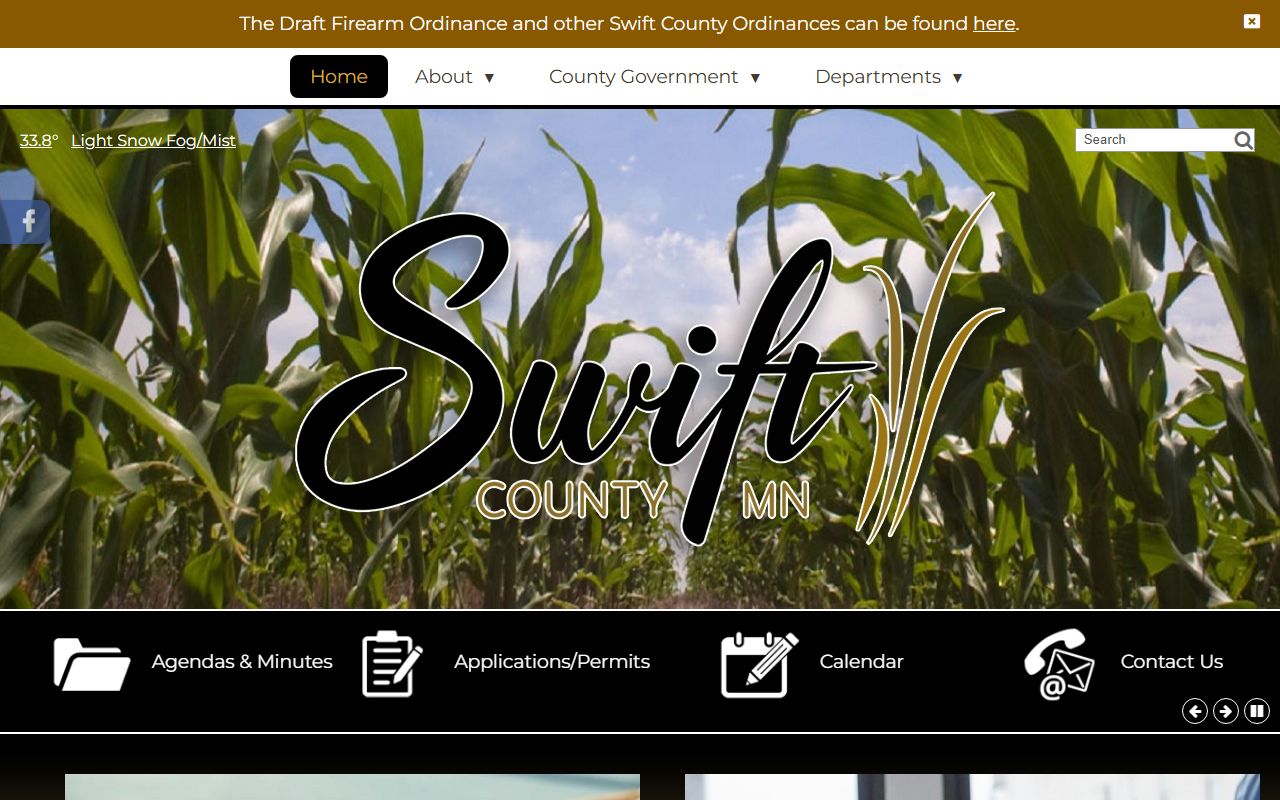
The county site links to GIS maps, online tax records, and other tools that help researchers find property information quickly.
Online Property Search Tools
Swift County offers several online tools for property research. The county's Interactive Maps platform lets you search parcels by owner name, address, or parcel number and view property boundaries on a map. This GIS tool is free and available to the public through the county website.
The Online Real Estate Taxes portal shows current tax status, payment history, and assessed values for any parcel in the county. This is useful when doing due diligence before a real estate transaction. The iDocMarket system provides access to recorded documents and is available for users who need to pull actual filed instruments, including deeds and mortgages.
Swift County also maintains Public Land Survey System (PLSS) data, which helps identify the legal description of a parcel. This is especially important in rural Swift County where land descriptions often rely on township, range, and section references rather than street addresses.
Note: Online access to recorded documents may require account setup through iDocMarket. Contact the recorder's office at 320-843-3377 for access details.
Recording Requirements in Swift County
All deeds recorded in Swift County must comply with Minnesota Statute 507.093, which sets formatting standards for real estate documents. Requirements include a three-inch top margin on the first page, legible text, and a return address for the document after recording. Documents that don't meet these standards will be returned unfiled.
Deed tax is required on most property transfers under Minnesota Statute 287.21. The current rate is 0.33% of the net consideration, with a minimum tax of $1.65. The county auditor must certify that all property taxes are paid before most transfer documents can be recorded, as required by Minnesota Statute 272.12. This tax certification step is easy to overlook and can delay recording if skipped.
Spousal interests in homestead property are governed by Minnesota Statute 507.02. In many cases, both spouses must sign a deed conveying homestead property even if only one holds title. Warranty and quitclaim deed forms are defined under Minnesota Statute 507.07.
Types of Deed Records
Swift County records several types of deeds and property instruments. Warranty deeds are the most common in arms-length sales. They convey full ownership and include the grantor's promise that the title is clear of defects. Quitclaim deeds transfer whatever interest the grantor holds without any warranty, and are often used in family transfers, divorce settlements, or trust transactions.
Transfer on Death Deeds (TODDs) let an owner name a beneficiary who will receive the property automatically at death, without probate. These are filed with the recorder during the owner's lifetime and governed by Minnesota Statute 507.071. Contracts for deed, where the seller finances the purchase and the buyer pays over time, are recorded under Minnesota Statute 507.235 and show up in the land records just like other transfer documents.
- Warranty deeds - full title guarantee, used in most property sales
- Quitclaim deeds - no warranty, common in family transfers and corrections
- Transfer on Death Deeds - passes title at death, avoids probate
- Contracts for deed - seller-financed purchases with recorded payment terms
- Mortgages and satisfactions - liens and their releases
- Plats - recorded subdivision maps showing lot boundaries
Note: Each deed type serves a distinct purpose. Choosing the wrong type for your transaction can create title problems that are costly to fix later.
Why Recording Matters
Under Minnesota Statute 507.34, a deed that is not recorded is void against any later buyer who pays value and records first without notice of the prior transfer. This "race-notice" rule means recording quickly after closing is essential to protect your ownership rights.
Swift County, like most Minnesota counties, uses both the abstract and Torrens systems. Abstract land relies on a chain of title built from recorded documents going back to the original patent. Torrens land is governed by Minnesota Statute 508, which creates a court-registered certificate of title. Torrens certificates are conclusive evidence of ownership, but transactions on Torrens land must go through the Registrar of Titles rather than the standard abstract recording process.
Recording also provides public notice. Anyone can search the records and find out who owns a parcel, what liens exist, and what restrictions apply. This transparency supports a functioning real estate market and protects both buyers and lenders.
Passport Services
The Swift County Recorder's office also provides passport acceptance services. Passport processing is available from 8:00 AM to 3:30 PM on weekdays. If you need a passport, bring your application, photo ID, birth certificate, and payment. This is a separate service from land records but is handled by the same office.
Cities in Swift County
Benson is the county seat and largest city in Swift County. No cities in Swift County meet the 100,000 population threshold for a dedicated city page on this site. Benson and other communities in the county are served by the Swift County Recorder for all deed recording and property record needs.
Nearby Counties
These counties border Swift County. Property records for neighboring areas are held by their respective recorders.