
Kandiyohi County Deed Records Search
Kandiyohi County deed records are filed with the County Recorder in Willmar and are available online through the Tapestry and Laredo platforms. Historical records go back to the mid-1800s. This page explains where to find deed records, how to search them, and what the recording process requires.
Kandiyohi County Deed Records Overview
Kandiyohi County Recorder's Office
The Kandiyohi County Recorder is based at 400 Benson Ave, Willmar, MN. The office records all property deeds, maintains the public land records index, and processes requests for certified copies and document lookups. You can access the county's online services and contact information through the official site at co.kandiyohi.mn.us.
Kandiyohi County uses both Abstract and Torrens title systems. Most rural properties in the county run under Abstract title, where a chain of recorded deeds establishes ownership history. Torrens title, which involves a court-issued certificate of registration, applies to some properties. The Recorder's office can tell you which system covers any specific parcel.
Office hours are generally Monday through Friday during standard business hours. If you are coming in to record a deed or search records in person, calling ahead is worth doing. Staff can tell you if there are any delays or special requirements on the day you plan to visit.
The screenshot below shows the Kandiyohi County website, which provides links to recorder services, online property search tools, and contact details for the office in Willmar.
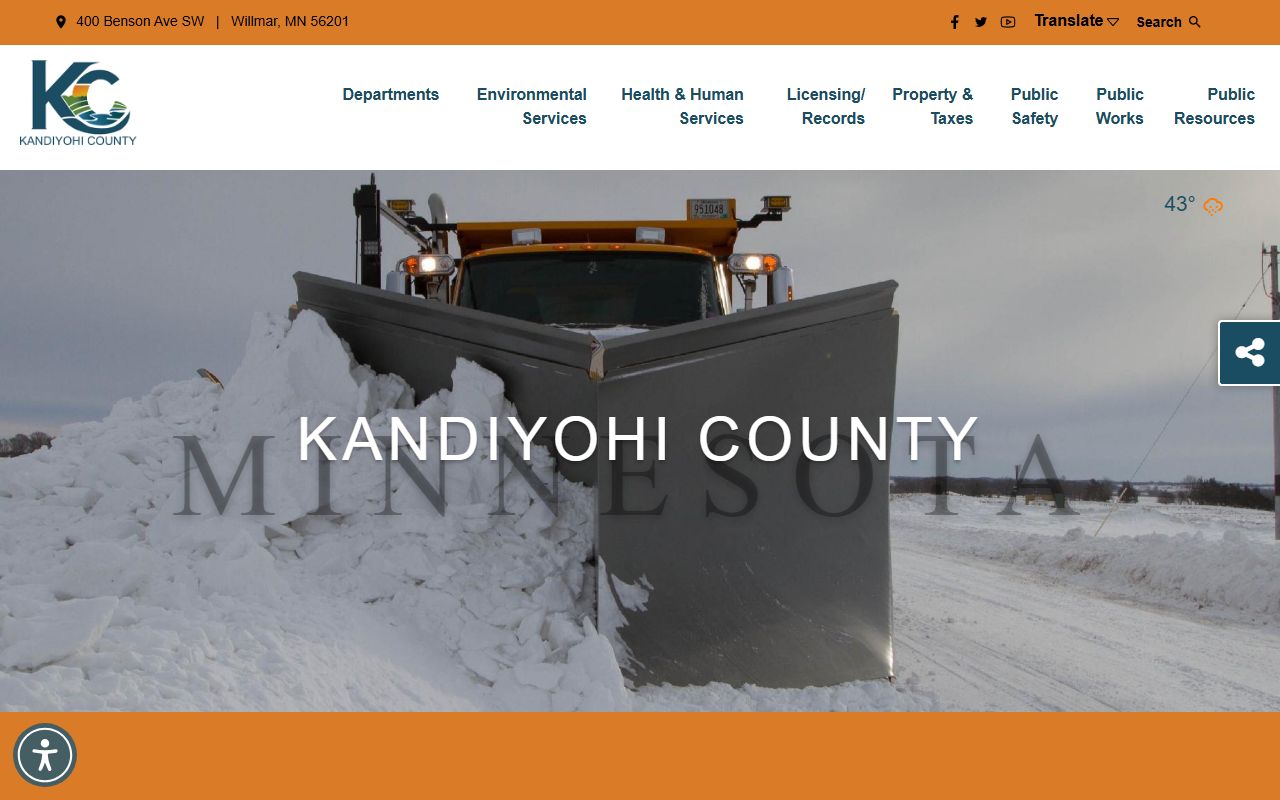
Use the county site to find the direct link to Tapestry or Laredo for online deed record searches.
Online Access to Kandiyohi County Deed Records
Kandiyohi County provides online access to deed records through two platforms: Tapestry and Laredo. Both systems let you search by name, document type, or date range. Tapestry is a web-based platform that works without special software and is well suited for occasional users who just need to look up a deed or two. Laredo is a more advanced subscription platform used frequently by title companies, abstractors, and attorneys who search records regularly.
To access either system, start at the Kandiyohi County Recorder's page on the county website. There you will find the links and any current fee information. Tapestry typically charges a per-document fee for printed or downloaded copies. Laredo subscription accounts provide broader access at a flat rate, making them more cost-effective for frequent users.
Both platforms cover deeds recorded in recent decades. For records from the mid-1800s through the early twentieth century, the digitized coverage may be incomplete. Older records in bound ledgers or on microfilm are available at the Recorder's office in Willmar. An in-person visit or mail request is often needed for very early title history.
The Minnesota Geospatial Information Office also provides property and parcel data statewide, including Kandiyohi County, at mngeo.state.mn.us. This free mapping tool is a useful complement to the county's detailed deed search platforms.
Recording Fees and Requirements in Kandiyohi County
The base fee to record a deed in Kandiyohi County is $46. Additional pages may cost more. The Recorder's office can give you the exact total for any specific document when you call or arrive.
Minnesota deed tax must be paid at the time of recording for most property transfers. The rate is 0.33% of the net consideration under Minn. Stat. 287.21. Tax-exempt transfers, such as gifts between close family members or certain government conveyances, require a completed deed tax exemption form that identifies the specific exemption that applies.
Before the Recorder will accept a deed, the County Auditor must sign off that property taxes on the parcel are current. Minn. Stat. 272.12 makes this tax certificate a required step in the recording process. In a standard real estate closing, this step is handled automatically. If you are recording without a title company, you need to stop at the Auditor's office first.
Physical document standards apply to all recorded instruments. Minn. Stat. 507.093 requires adequate margins, minimum font sizes, and paper that will hold up over time. A deed that does not comply with these standards will be rejected by the Recorder. The rejection does not mean the transfer failed, but it does mean you have to fix the document and try again, which creates delays.
Types of Deeds Found in Kandiyohi County Records
Warranty deeds are the most common type in Kandiyohi County's recorded documents. When a seller gives a warranty deed, they promise that the title is clean and agree to defend the buyer against any claims that arise from the seller's own ownership period. Minn. Stat. 507.07 defines the legal requirements for both warranty and quitclaim deed language in Minnesota.
Quitclaim deeds transfer whatever interest the grantor holds, without any guarantees. They are useful in estate settlements, family transfers, and situations where a party wants to clear up a title cloud. Because they do not include a warranty, they are simpler to prepare and less expensive but offer the buyer no protection against future claims from the seller's period of ownership.
Transfer on Death Deeds let property owners name beneficiaries who will receive the property at death without probate. Minn. Stat. 507.071 governs Minnesota TODDs. A TODD must be recorded while the owner is alive. Owners can revoke it at any time, which makes it a flexible estate planning tool that many Kandiyohi County residents use to keep property out of probate.
Contracts for deed show up frequently in Kandiyohi County records, especially for farm land and rural residential parcels. These are seller-financed purchase arrangements where the buyer pays over time and receives the deed when the full balance is paid. Minn. Stat. 507.235 requires contracts for deed to be recorded within four months of signing. Recording protects the buyer's interest against third-party claims.
Property Fraud Protection for Kandiyohi County Owners
Property deed fraud is a real risk in Minnesota. Fraudsters can record fake deeds to claim ownership of properties they do not own. Kandiyohi County property owners can protect themselves by checking their records regularly through Tapestry, Laredo, or the in-person system at the Recorder's office.
Search your name and parcel number at least once a year. If you see a deed or other document you did not sign, contact the Recorder's office right away. The Minnesota Attorney General's office at ag.state.mn.us has resources for victims of property fraud and can help you understand how to challenge a fraudulent recording.
Title insurance is another layer of protection. An owner's title insurance policy covers losses that result from title defects, including fraud by prior owners. It does not cover fraud that happens after you buy the property, but it does protect you from problems in the earlier title history.
Historical Deed Records in Kandiyohi County
Kandiyohi County has deed records going back to the mid-1800s, covering the earliest land grants, homestead filings, and sales in the area. These records document the agricultural settlement of west-central Minnesota in remarkable detail. Some of the earliest recorded documents are in fragile condition and only available for viewing at the Recorder's office.
For title work on older properties, a title abstractor will often need to trace the chain of title through these historical records. Gaps in the chain, even old ones, can create problems that need to be resolved before a property can be sold or refinanced. The Recorder's office can help abstractors locate older records in whatever format they are stored.
Under Minn. Stat. 507.34, an unrecorded deed is void as against any subsequent purchaser or encumbrancer who pays for value and takes without notice. This rule means that recording matters. Even a deed that is perfectly valid between buyer and seller provides no protection against a later competing claim if the deed was never put on file with the county.
Cities in Kandiyohi County
Willmar is the county seat and the largest city in Kandiyohi County. No cities in Kandiyohi County currently meet the population threshold for a dedicated city page on this site.
Nearby Counties
Kandiyohi County sits in west-central Minnesota and borders several counties that each maintain separate deed record systems.