
Lac Qui Parle County Deed Records
Lac Qui Parle County deed records are maintained by the County Recorder in Madison, MN, and document property ownership and land transfers across this agricultural county in western Minnesota. This guide covers how to search Lac Qui Parle County deed records, what you will find, and how recording works.
Lac Qui Parle County Deed Records Overview
Lac Qui Parle County Recorder's Office
The Lac Qui Parle County Recorder is located at 600 6th St, Madison, MN. The office is responsible for recording all property deeds and land instruments, maintaining the county's official land records, and providing public access to those records. You can reach the office through the county website at lqpco.com, which has contact information, hours, and links to county services.
The Recorder manages both Abstract and Torrens title records. Abstract title is the older and more common system in Lac Qui Parle County, where ownership is established by tracing a chain of recorded documents back to the original land grant. Torrens title involves a court-issued certificate of registration and applies to a smaller number of properties. If you are researching a specific parcel, the Recorder's office can tell you which system applies.
Office hours are generally Monday through Friday during standard business hours. For simple document lookups or certified copy requests, a phone call or email to the office can often accomplish what you need without a trip to Madison. For complex title searches or searches involving many related parcels, an in-person visit is usually more efficient.
The screenshot below shows the Lac Qui Parle County website, where recorder services and property record access are listed.
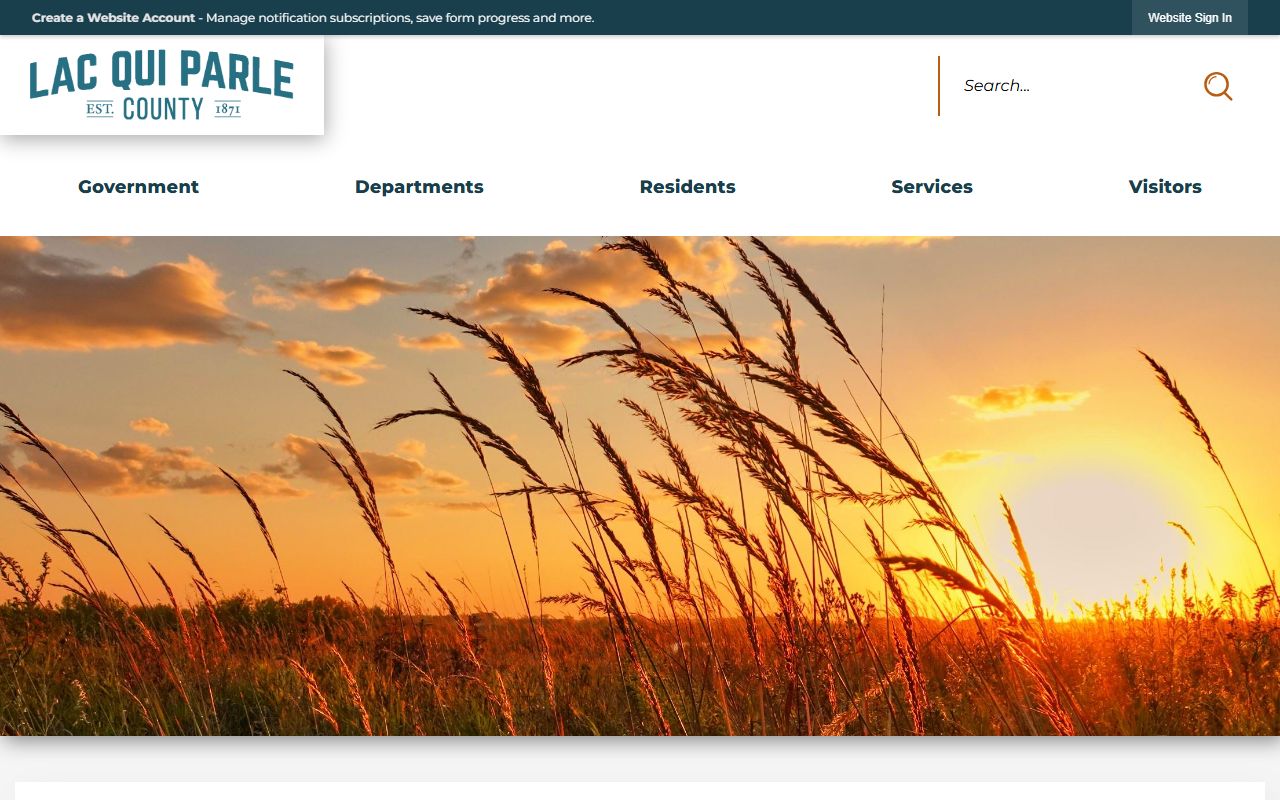
The county site is a useful first stop for finding the current online search link and Recorder contact details.
How to Search Lac Qui Parle County Deed Records
You can search Lac Qui Parle County deed records through the county's online property system, in person at the Recorder's office, or by mail. The county website typically provides a link to the online search tool. You can search by owner name, parcel identification number, or legal description. Many recent deeds and other instruments are available as scanned images you can view online.
In-person searches at the courthouse in Madison give you access to the full document index and the ability to request printed copies on the spot. Staff can assist with both current records and older historical files. Bring as much identifying information as you have, whether that is an address, a parcel number, or the name of a past or current owner. Even a township and range location is often enough to begin a productive search.
Mail requests work well for straightforward lookups. Send your request to the Lac Qui Parle County Recorder at 600 6th St, Madison, MN. Describe the property and documents clearly, include payment for the copy fee, and provide a return address. Turnaround times vary depending on staff workload. Calling first to confirm the fee amount and current processing time is a good step before mailing anything.
For a broader statewide view, the Minnesota Geospatial Information Office at mngeo.state.mn.us provides parcel maps and ownership data for all Minnesota counties, including Lac Qui Parle. This free tool is useful when you want to view property boundaries visually or check neighboring parcels alongside the ownership records in the county index.
Deed Recording Fees and Requirements in Lac Qui Parle County
The base recording fee for a deed in Lac Qui Parle County is $46. Documents with additional pages may have higher totals. Confirm the current fee with the Recorder before submitting, since the schedule can change.
Minnesota deed tax applies to most property transfers. Under Minn. Stat. 287.21, the tax rate is 0.33% of the purchase price. The tax is due at the time of recording. Certain transfers qualify for exemptions, including gifts between close family members, transfers to a revocable trust, and certain government conveyances. Each exemption requires a form explaining the basis for the claim.
Before the Recorder accepts a deed for filing, the County Auditor must certify that all property taxes on the parcel are current. Minn. Stat. 272.12 requires this step. In a normal closing, the title company or attorney handles it as part of the process. If you are recording on your own, stop at the Auditor's office first to get the tax certificate.
Documents must also meet the physical standards under Minn. Stat. 507.093. The required top margin, font size, and paper quality are all specified in this statute. A deed that fails these standards will be returned without recording. This is more likely to happen with do-it-yourself forms than with professionally prepared documents, but it is worth checking before you drive to Madison.
Types of Deeds Recorded in Lac Qui Parle County
Warranty deeds are the most frequently recorded deed type in Lac Qui Parle County. They provide the buyer with the strongest title protection because the seller guarantees the title is free of undisclosed encumbrances and agrees to defend the buyer against future claims. Minn. Stat. 507.07 defines the required deed language in Minnesota for both warranty and quitclaim deed types.
Quitclaim deeds transfer only what the grantor actually owns, without any warranty. These are common in estate distributions, divorces, and family property transfers where both parties understand the title history and a warranty is not needed. Quitclaims are simpler and cheaper to prepare, though they give the buyer no protection against claims from the seller's period of ownership.
Transfer on Death Deeds allow owners to designate a beneficiary who will receive the property at death, bypassing probate. Minn. Stat. 507.071 governs TODDs in Minnesota. The deed must be recorded while the owner is alive and can be revoked at any time. For farm families in Lac Qui Parle County, TODDs can be a straightforward way to pass agricultural land to the next generation without the expense or delay of probate.
Contracts for deed are used when buyers and sellers arrange private financing rather than working with a bank. The seller keeps title until the buyer pays off the full contract price. Under Minn. Stat. 507.235, contracts for deed must be recorded within four months of signing. Filing protects the buyer's interest against any competing claims that might arise while the contract is still being paid off.
Lac Qui Parle County records also include plat maps, survey documents, easement agreements, and mortgage releases. Each of these documents affects how land can be used or sold and is part of the permanent public record when filed with the Recorder.
Property Fraud and Record Monitoring in Lac Qui Parle County
Deed fraud can affect rural counties just as easily as urban ones. A fraudster who records a fake deed claiming ownership of your property can create serious legal problems. Lac Qui Parle County property owners should check their deed records periodically to make sure no unauthorized documents appear.
Search your name and parcel number through the county's online system or at the Recorder's office. If you find anything you did not sign or authorize, contact the Recorder immediately. The Minnesota Attorney General at ag.state.mn.us provides fraud resources and can help you understand how to challenge a fraudulent recording and protect your property rights.
Under Minn. Stat. 507.34, a deed that is not recorded is void as against any subsequent purchaser who pays value without notice. This means that recording your deed promptly is one of the most important things you can do after a property purchase. Do not leave a deed sitting unrecorded, even briefly.
Historical Property Records in Lac Qui Parle County
Lac Qui Parle County's historical deed records document the settlement and agricultural development of the county from its early years. These records are held at the Recorder's office and are available to the public. Genealogy researchers, title abstractors, and historians use these files to trace property ownership and family history across generations.
Older records may be in bound ledger books or microfilm format rather than digitized files accessible online. For records from the early twentieth century or earlier, an in-person visit to the Recorder's office in Madison is usually necessary. Staff can direct you to the right format and help you locate what you need.
The Minnesota Department of Revenue at revenue.state.mn.us also maintains property sales data that can supplement the Recorder's historical deed records. Tax records and sales history can help confirm the timing and value of historical transactions and fill in gaps in the recorded chain of title.
Cities in Lac Qui Parle County
Madison is the county seat and the largest city in Lac Qui Parle County. No cities in Lac Qui Parle County currently meet the population threshold for a dedicated city page on this site.
Nearby Counties
Lac Qui Parle County is in western Minnesota, bordering South Dakota to the west and several Minnesota counties on other sides.