
Access Olmsted County Deed Records
Olmsted County deed records document all property transfers, mortgages, liens, and land filings in this southeastern Minnesota county anchored by Rochester, the state's third-largest city. The Recorder's Office maintains a robust online system with LandShark document access and a free public access portal, giving homeowners, buyers, title professionals, and attorneys multiple ways to search deed history and verify property ownership.
Olmsted County Deed Records Overview
Olmsted County Recorder's Office
The Olmsted County Recorder's Office in Rochester is the official keeper of all deed records, mortgages, plats, liens, and related property instruments in the county. The office processes new recordings, maintains the master index, and provides multiple online tools alongside in-person service at the Government Center in Rochester.
Reach the Recorder at 507-328-7660. The county website at olmstedcounty.gov lists current office hours, address, and links to LandShark, the public access portal, and property assessment data. Olmsted County is one of Minnesota's larger counties and the Recorder's Office handles a high volume of recordings each year.
Olmsted County uses both abstract and Torrens title systems. Many urban and suburban parcels in Rochester are on the Torrens system, while rural properties typically use abstract title. Knowing which system applies to a property matters for title research because Torrens properties require approval from the examiner of titles for certain documents under Minnesota Statute 508.
The county's main homepage is a good starting point for finding recorder services and accessing online property search tools.
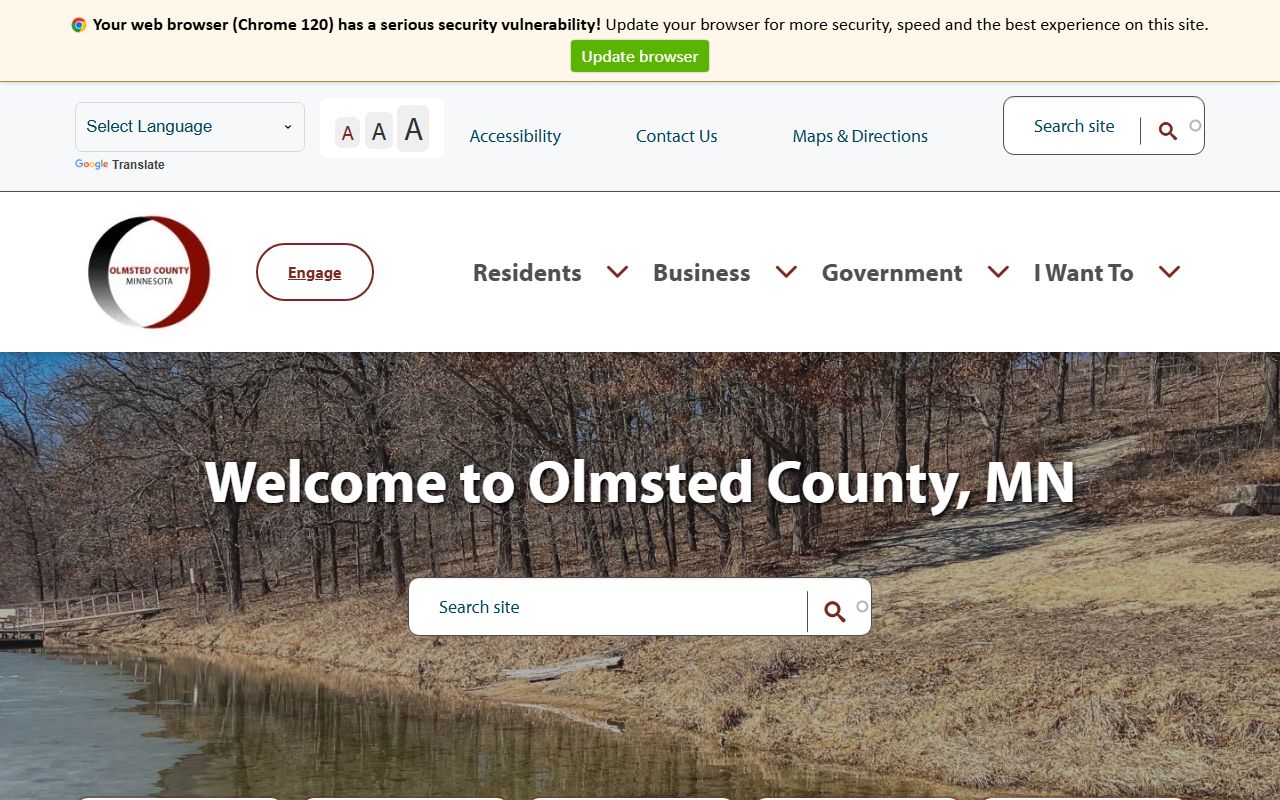
The Olmsted County website links directly to LandShark, the public access portal, and property assessment information for all approximately 76,000 parcels in the county.
Searching Olmsted County Deed Records
Olmsted County offers two main online search tools. The first is the free public access portal at publicaccess.co.olmsted.mn.us, which allows you to search by address, owner name, parcel ID, document number, or legal description. This portal is open to anyone and requires no login.
The second is LandShark, which provides document-level access including deed images, mortgage records, and detailed index searching by grantor and grantee name. LandShark is particularly useful for chain of title research because it lets you trace every recorded instrument tied to a parcel.
The Recorder's Office at 507-328-7660 can assist with questions about specific documents or older records not fully available in the online systems. For complex title work, in-person research at the Rochester Government Center may also be needed.
Under Minnesota Statute 507.34, recording a deed provides constructive notice to all future buyers and lenders. Given Rochester's active real estate market, checking the Olmsted County deed records before any property transaction is standard practice and protects against prior unrecorded claims.
Online Access: Public Portal and LandShark
The Olmsted County public access portal is free, no login needed, and provides current parcel data, ownership information, and links to recorded documents. It covers approximately 76,000 parcels and is updated regularly. The portal is the fastest way to verify who owns a specific property or look up a parcel by address.
The public access portal is shown below, giving a clear view of the search interface available to all users.
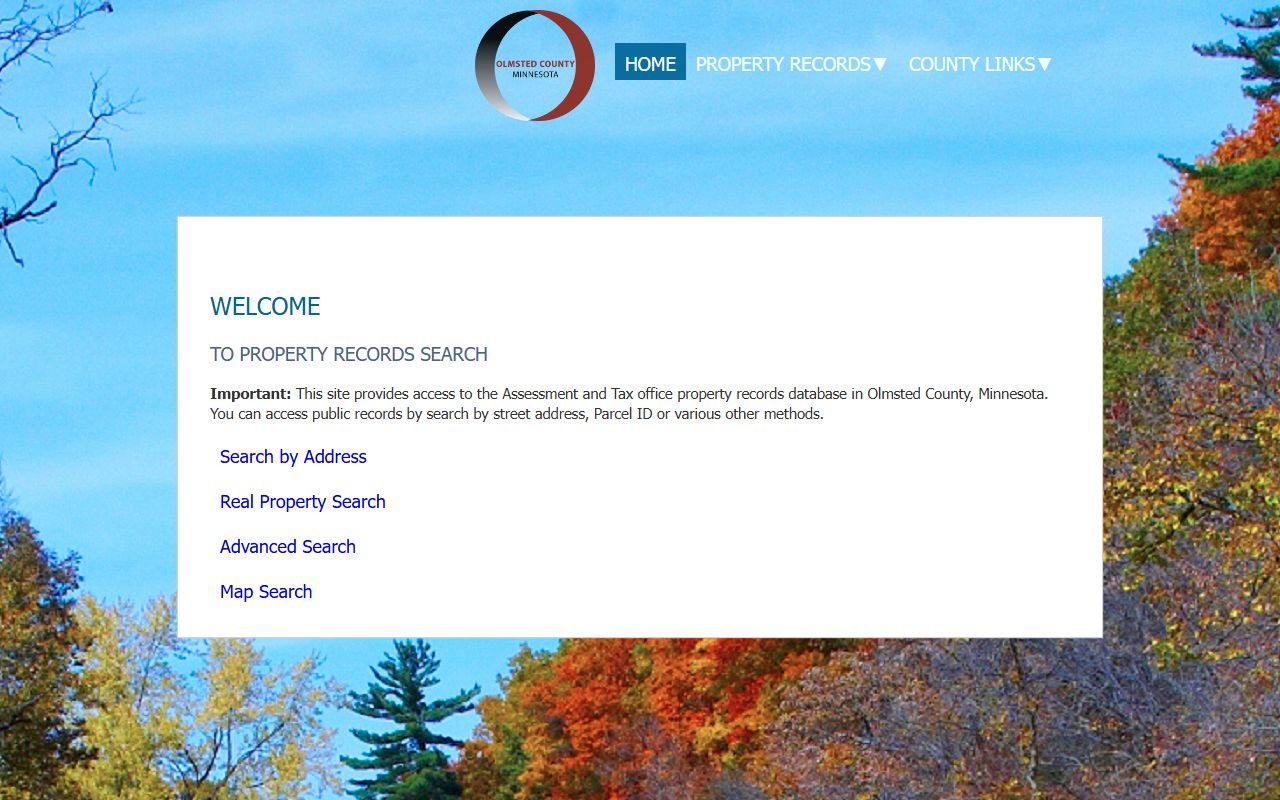
The portal allows searches by address, owner name, parcel ID, document number, and legal description, making it one of the more flexible search tools available among Minnesota county recorder offices.
LandShark adds deeper document-level access, including scanned images of deeds, mortgages, plats, and other instruments. Title companies, real estate attorneys, and surveyors use LandShark regularly for Olmsted County research. Subscription accounts are available for high-volume users.
The Minnesota Geospatial Information Office at mngeo.state.mn.us provides supplemental statewide land ownership data that can complement Olmsted County online searches.
Recording Fees and Requirements
The base recording fee in Olmsted County is $46 for the first page of a deed. Multi-page documents cost more. Fees follow the Minnesota state schedule. Given the active Rochester real estate market, the Recorder processes a large number of recordings annually.
Deed tax applies to most real estate transfers under Minnesota Statute 287.21. The rate is 0.33% of the net consideration. Rochester home prices are among the higher in greater Minnesota, so deed tax amounts can be substantial. On a $400,000 home, the deed tax is $1,320. The county auditor certifies deed tax payment before the Recorder accepts the document.
Documents must meet the physical formatting standards of Minnesota Statute 507.093. This includes a 3-inch top margin on the first page, legible text, an appropriate font size, and a return address. Non-conforming documents may be returned or charged an extra fee.
Contact the Recorder at 507-328-7660 for current fee schedules. The office accepts checks, cash, and sometimes credit cards. Confirm payment options before visiting or mailing documents.
Types of Property Deeds
Olmsted County records a full range of deed types reflecting Rochester's active and diverse real estate market.
A warranty deed is the most common deed for market sales. The seller guarantees clear title and will defend the buyer against any future claims. Under Minnesota Statute 507.02, both spouses must sign a deed conveying marital property, even if only one spouse is on the title.
A quitclaim deed transfers only the interest the grantor actually holds, with no warranty. Common for family conveyances, divorce transfers, trust transactions, and LLC transfers. No title guarantee is given.
A Transfer on Death Deed lets real property pass directly to a named beneficiary at death without probate. Minnesota Statute 507.071 governs these in Minnesota. The TODD must be recorded while the owner is alive. It can be revoked any time before death.
Contracts for deed are used in seller-financed transactions. These are recorded to protect both parties. Buyer default and cancellation follow Minnesota Statute 507.235. Spousal signature requirements under Minnesota Statute 507.24 also apply to certain mortgages and contracts for deed involving marital property.
Property Fraud Protection
Deed fraud is a statewide concern, and Olmsted County property owners are not immune. A fraudster can file a false deed claiming to transfer your property to a new owner without your knowledge. Checking your property records periodically through the public access portal is one of the best ways to catch this early.
If you find an unexpected document recorded against your property, contact the Olmsted County Recorder at 507-328-7660 immediately, and also reach out to the County Attorney's office. The Minnesota Attorney General at ag.state.mn.us has resources on property fraud and how to respond if you believe a fraudulent deed has been recorded.
Under Minnesota Statute 272.12, all deeds must pass through the county auditor for certification before the Recorder accepts them for filing. This provides a checkpoint that helps verify the parcel and deed tax status for each instrument submitted.
Ask the Recorder's Office whether Olmsted County offers an automated property alert service. Some Minnesota counties send email notifications when any new document is recorded against a specific parcel, which is a useful early warning system.
Historical Records in Olmsted County
Olmsted County was established in 1855. Deed records date to those early years, starting with the original federal land patents that transferred government land to the first settlers. These root deeds are the starting point for most title chains in the county.
Rochester's growth from a small prairie settlement to a major medical and technology hub is reflected in the volume and variety of deed records filed over the decades. Early homestead entries, farm conveyances, original town plats, and eventually commercial and residential subdivision plats all flow through the county recorder's records.
Property assessment data for Olmsted County covers roughly 76,000 parcels, as noted on the county assessor's page at olmstedcounty.gov. This dataset is a useful complement to the deed record for anyone researching property values and ownership history.
Older deed books and historical plat maps are held at the Rochester Government Center. Some historical records have been digitized; others require in-person review. The Recorder's Office can advise on the best approach for researching a specific time period.
Cities in Olmsted County
Olmsted County's largest city is Rochester, which qualifies for a dedicated city page. Rochester is the county seat and home to the Mayo Clinic, and it accounts for a substantial share of the county's property transactions each year. Other communities in Olmsted County include Byron, Stewartville, and Chatfield, which do not currently meet the population threshold for dedicated city pages but have all property records maintained at the county Recorder's Office in Rochester.
Nearby Counties
Olmsted County borders several southeastern Minnesota counties. Each maintains its own Recorder's Office and deed record database.