
Rochester Property Records and Deed Search
Rochester deed records are filed with Olmsted County, which manages property transfers, title documents, mortgage instruments, and all recorded land records for parcels within Rochester and the surrounding area. This page explains how to search those records using county online tools, what the Olmsted County GIS offers, and what city-level resources help with property research in Rochester.
Rochester Deed Records Overview
Olmsted County Recorder - Rochester Deeds
Deed records for Rochester are filed at the Olmsted County Recorder's Office, located at 151 4th Street SE, Rochester, MN 55904. The Property Records and Licensing division can be reached by phone at 507-328-7670 or by email at propertyweb@olmstedcounty.gov. The office manages approximately 76,000 assessed properties in the county, with Rochester representing the largest share.
The recorder handles warranty deeds, quitclaim deeds, transfer-on-death deeds, mortgages, releases, and other instruments affecting title. Under Minnesota Statute 507.34, a deed that is not recorded is void against a later purchaser who records without notice. That means every Rochester buyer should record their deed as soon as possible after closing.
The state base recording fee is $46 per document. Deed tax is charged at 0.33% of the net consideration under Minn. Stat. 287.21. Before recording, tax certification is required under Minn. Stat. 272.12 to confirm that property taxes are current. Documents must also comply with formatting standards under Minn. Stat. 507.093 or the recorder will return them.
Note: You can visit the Olmsted County property assessments page for information on the assessor's office, which works alongside the recorder to maintain the county's property records database.
LandShark Online Search Tool
Olmsted County offers LandShark for online deed record searches. The LandShark system lets you search by address, owner name, parcel ID, document number, or legal description. It gives access to recorded instrument images going back many years, which makes it useful for title searches and chain-of-title verification. For questions about LandShark access, call 507-328-7660.
LandShark is the primary tool for title companies, attorneys, and researchers who need to pull recorded documents for Rochester properties. It provides the kind of detailed document-level access that is not available through the free property lookup tools. Occasional users can typically purchase access per search or per session rather than committing to a subscription.
The image below shows the Olmsted County property assessments portal, which is the starting point for most Rochester property research before moving into deeper deed searches via LandShark.
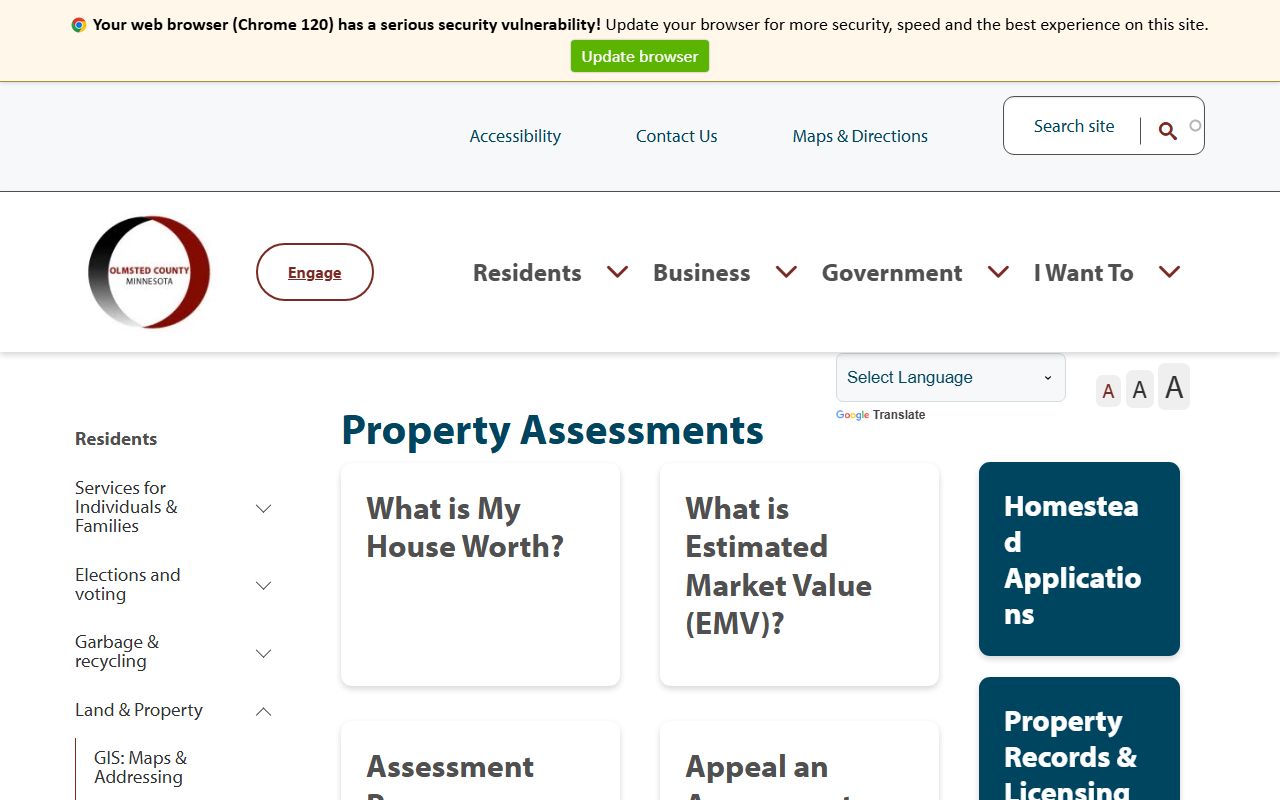
The assessments page links to property detail pages that show ownership, parcel boundaries, and recent sale history for Rochester properties.
Olmsted County GIS Property Search
The Olmsted County GIS public access portal provides map-based property searches for Rochester and all other Olmsted County parcels. You can search by address, owner, or parcel ID. The GIS displays parcel boundaries, land dimensions, zoning classifications, and environmental overlays. It is free to use and requires no login.
The GIS is especially useful when you know the location of a property but not the owner or parcel ID. You can click on a parcel on the map to get basic property data and then use that data to run a more detailed search in LandShark. The combination of the GIS map and LandShark gives you a complete picture of any Rochester property's ownership and deed history.
The image below shows the public access GIS interface for Olmsted County, which covers all Rochester parcels.
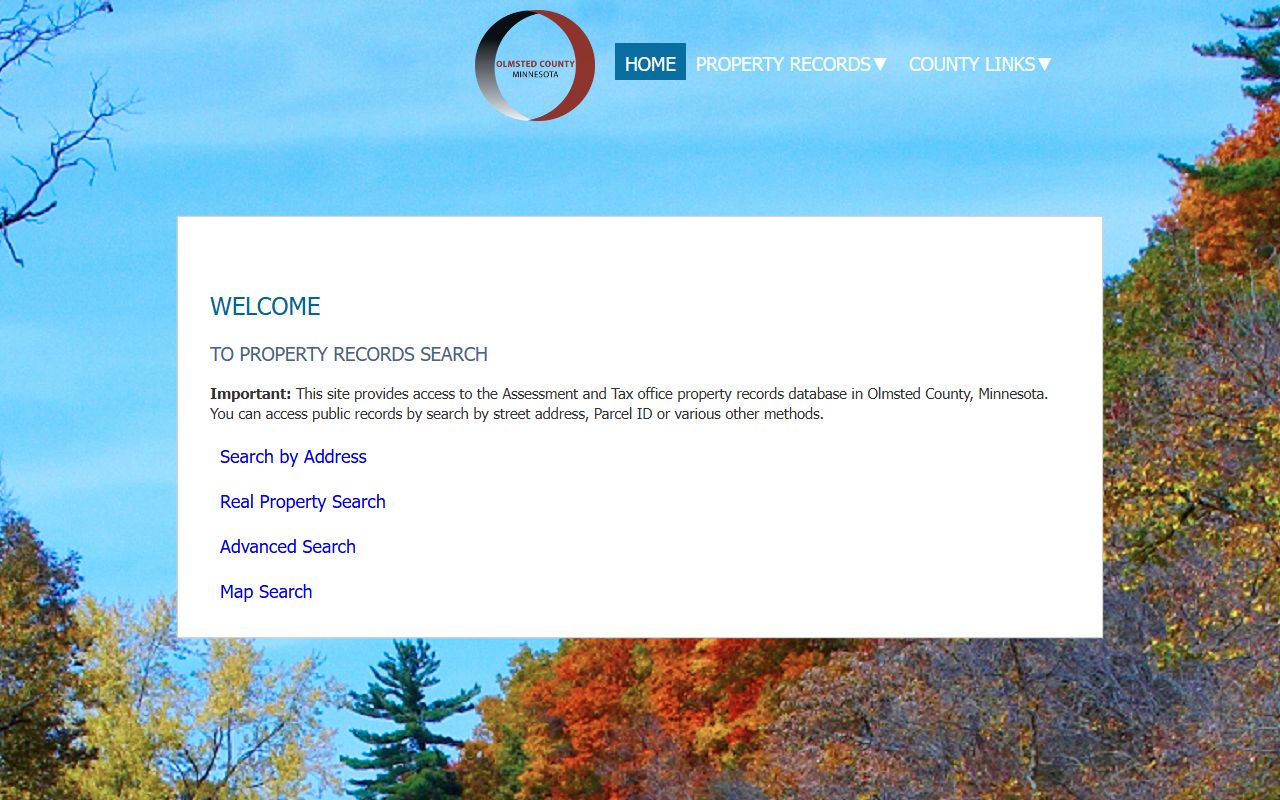
The GIS map is updated regularly and reflects current parcel boundaries, zoning layers, and ownership data as maintained by Olmsted County.
Note: The Olmsted County GIS does not replace a formal title search but is a strong starting point for any Rochester deed research project.
Deed Types Used in Rochester
Warranty deeds and quitclaim deeds are the most common instruments recorded for Rochester property transfers. Both are governed by Minn. Stat. 507.07. A warranty deed includes the seller's promise that title is good and defensible. A quitclaim deed conveys only the grantor's current interest without any warranty of title quality. Most arm's-length sales use warranty deeds. Transfers between family members often use quitclaim deeds.
If the property is homestead and the owner is married, both spouses must sign under Minn. Stat. 507.02. This rule applies to all homestead conveyances in Rochester. Skipping a spousal signature creates a title defect that can be difficult and costly to fix later.
Transfer-on-death deeds under Minn. Stat. 507.071 are used in Rochester for estate planning. A TODD lets the owner name a beneficiary without giving up control during life. The deed must be recorded before the owner's death to take effect. Rochester also has Torrens title parcels, governed by Minn. Stat. ch. 508, which require a different recording process through the Olmsted County Examiner of Titles.
Why Recording Matters in Rochester
Recording is the act that makes a deed legally effective against the world. Under Minn. Stat. 507.34, Minnesota's race-notice rule means the first buyer to record wins over a later claim, as long as they had no prior notice. A Rochester buyer who delays recording runs a real risk, even if their deed is signed and notarized. Recording quickly after closing eliminates that risk.
The public record at the Olmsted County Recorder is also the foundation of every title insurance policy issued for Rochester property. Title companies search the recorded documents to identify liens, encumbrances, and competing claims before issuing coverage. When a deed is on record, it becomes part of that searchable chain of title that protects every future buyer and lender.
Nearby Cities
Deed records for these nearby communities are also filed with their respective county recorders.