
Fillmore County Deed Records
Fillmore County deed records go back to 1853, making this one of the longer-running land record archives in southeast Minnesota. The Fillmore County Recorder in Preston maintains records from 1853 through the present, with two online search platforms available depending on the year range you need. IDoc Market covers 1964 to current, and Arca Search handles deed records from 1853 to 1963. The Recorder also offers abstracting services including new abstracts, updates, tract reports, O&E reports, and name searches for both abstract and Torrens property.
Fillmore County Deed Records Overview
Fillmore County Recorder Office
The Fillmore County Recorder is at 101 Fillmore Street, Preston, MN 55965. Phone is 507-765-3852. The Recorder's page is at co.fillmore.mn.us/departments/recorder/. Staff are available during regular business hours to help with deed record searches, copy requests, recording submissions, and abstracting services. Both in-person and mail submissions are accepted for recording.
Fillmore County land records date to 1853, which is before Minnesota became a state. The depth of this archive makes the county a valuable resource for anyone researching early land patents, homestead entries, or multi-generation ownership histories in southeastern Minnesota. The Recorder maintains these historical records alongside current filings.
The office provides a full range of abstracting services. This includes creating new abstracts, updating existing abstracts to current, running tract searches, producing O&E (ownership and encumbrance) reports showing the current owner and outstanding liens, doing 40-year reports, and running name searches. These services are available to the public, attorneys, title companies, and others researching Fillmore County deed records.
Online Search for Fillmore County Deed Records
Fillmore County deed records from 1964 to the present are available through IDoc Market. This is a subscription service at idocmarket.com. IDoc Market lets you search by grantor or grantee name, document type, recorded date, and other criteria. It's widely used by title companies and attorneys doing title work in Fillmore County.
For deed records from 1853 to 1963, Arca Search has a separate subscription service at arcasearch.com. Arca Search covers only deed documents in that date range. If you're researching a Fillmore County property with a long ownership history, you may need both services to cover the full span of recorded documents.
For occasional or one-time searches, visiting the Recorder's office in Preston is a practical option. Staff can pull records from any year in the archive and make copies. Bring the property address, parcel number, or party names to help focus the search. The office can also provide certified copies, which carry the county seal and are accepted for legal purposes.
The MnGeo land ownership portal at mngeo.state.mn.us includes Fillmore County parcel data and is a useful starting point for basic ownership information. The screenshot below shows the MnGeo interface for statewide land ownership research.
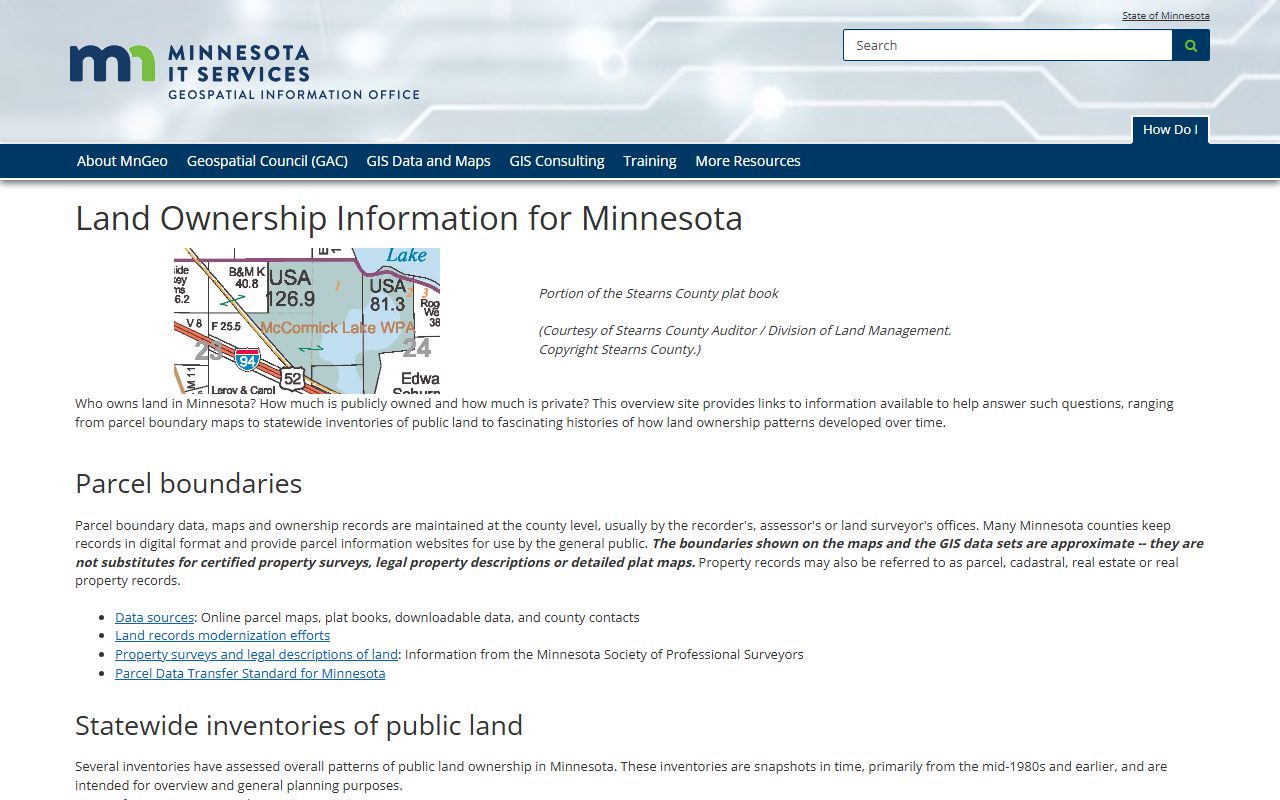
MnGeo compiles parcel data from county assessors statewide, including Fillmore County, and is a convenient first step when you want basic ownership information on a property.
Recording Requirements for Fillmore County Deeds
Documents submitted for recording in Fillmore County must comply with Minn. Stat. 507.093. The law requires 8.5 by 14 inch white paper, black ink printing, a minimum 8-point font, and a blank 3-inch space at the top of the first page. Documents that don't meet these requirements may be returned. Checking format before submission avoids delays.
The county auditor must certify that property taxes are current before any deed is recorded. Minn. Stat. 272.12 requires this step. The certification appears on the document. No deed enters the official record without it. For farmland and rural parcels in Fillmore County's bluff country, the auditor's certification is a routine part of every closing.
Under Minn. Stat. 507.34, an unrecorded deed is void against a later buyer or lender who records first and pays value without notice of the earlier transfer. Recording promptly after closing is essential. Fillmore County's rural land market includes farms, acreage parcels, and residential properties in communities like Preston, Spring Valley, and Rushford.
Homestead property requires both spouses to sign the deed. Minn. Stat. 507.02 is the governing statute. One-spouse signatures on homestead deeds are legally incomplete. When preparing a deed for homestead property in Fillmore County, verify the classification with the county assessor and ensure both spouses execute the document before recording.
Deed Types and Recording in Fillmore County
The Fillmore County Recorder handles warranty deeds, quitclaim deeds, contracts for deed, transfer on death deeds, and mortgages, along with other instruments tied to real property. Under Minn. Stat. 507.07, warranty deeds carry the seller's title guarantee. Quitclaims pass the grantor's interest only. Both types are common in Fillmore County for both residential and agricultural transactions.
Contracts for deed must be recorded within four months of being signed. Minn. Stat. 507.235 sets this deadline. Fillmore County's farm economy includes transactions where sellers carry the financing, making contracts for deed a document type the Recorder's office sees regularly. Late recording leaves the buyer's interest exposed to competing claims.
Transfer on death deeds let owners pass Fillmore County property to named beneficiaries at death without probate. Under Minn. Stat. 507.071, the deed must be recorded before death and is revocable while the owner lives. Farm families in Fillmore County use these to keep land in the family across generations without triggering a full probate proceeding.
Fillmore County Deed Tax
Deed tax is collected at the time of recording in Fillmore County. Under Minn. Stat. 287.21, the rate is 0.33% on consideration over $3,000. Transfers at or below $3,000 pay $1.65. For Fillmore County farmland, where per-acre values are significant, the deed tax can be a meaningful expense. Title companies calculate and pay it at closing. If you're recording a deed on your own, you'll pay the deed tax directly at the Recorder's counter.
The Minnesota Revisor of Statutes site at revisor.mn.gov has the full text of all statutes referenced in this page. The screenshot below shows the Revisor's portal, which is the official source for the recording laws, deed tax rules, and property statutes that apply in Fillmore County.
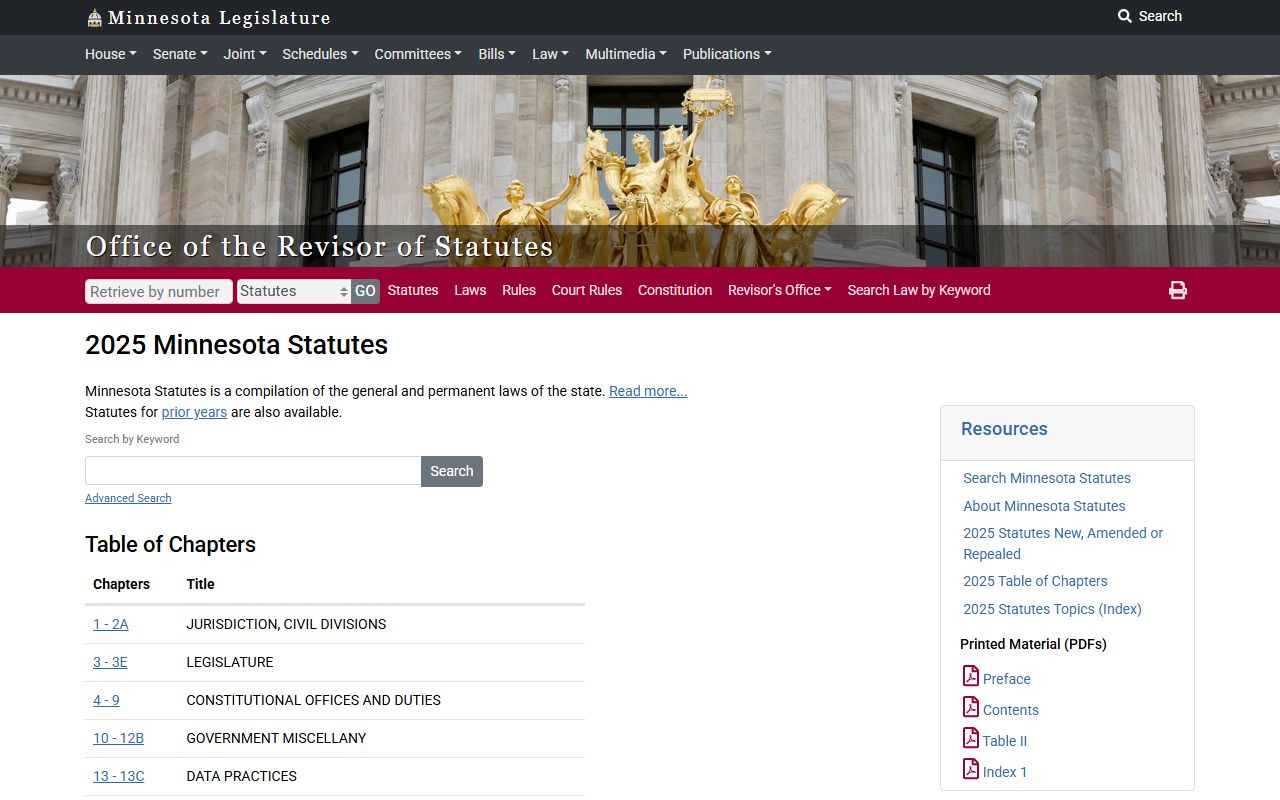
Use the Revisor's site to read the full statutes governing deed recording in Fillmore County, including chapters 507, 272, 287, and 508.
Cities in Fillmore County
Fillmore County's main communities include Preston, Spring Valley, Rushford, Lanesboro, and Harmony. No cities in Fillmore County meet the population threshold for a dedicated page on this site. All deed records for these communities are filed with the Fillmore County Recorder at 101 Fillmore Street in Preston.
Nearby Counties
Fillmore County is surrounded by other southeast Minnesota counties and borders Iowa to the south.