
Access Koochiching County Deed Records
Koochiching County deed records are kept by the County Recorder in International Falls, with land records dating back to 1907 when the county was formed. This page explains how to search deed records in Koochiching County, what the recording requirements are, and where to find property information online and in person.
Koochiching County Deed Records Overview
Koochiching County Recorder's Office
The Koochiching County Recorder is located at 715 4th St, International Falls, MN. The office handles recording of all property deeds, maintains the public land records index, and processes document requests from the public, title companies, and legal professionals. The county website at co.koochiching.mn.us provides contact details and links to county services.
The Recorder manages both Abstract and Torrens title records. Koochiching County has large tracts of forest land and rural property, most of which runs under Abstract title. A smaller number of properties may carry Torrens certificates. If you are researching a specific parcel and are not sure which system applies, the Recorder's office can tell you quickly using the parcel number.
The office is open Monday through Friday during standard business hours. International Falls is a border city, so the Recorder's office has some experience handling inquiries from both Minnesota residents and those with Canadian connections who own property in the county. If you are coming from outside the area, calling ahead is especially worthwhile to confirm hours and what you need to bring.
The screenshot below shows the Koochiching County website, where you can find recorder services and links to online property records.
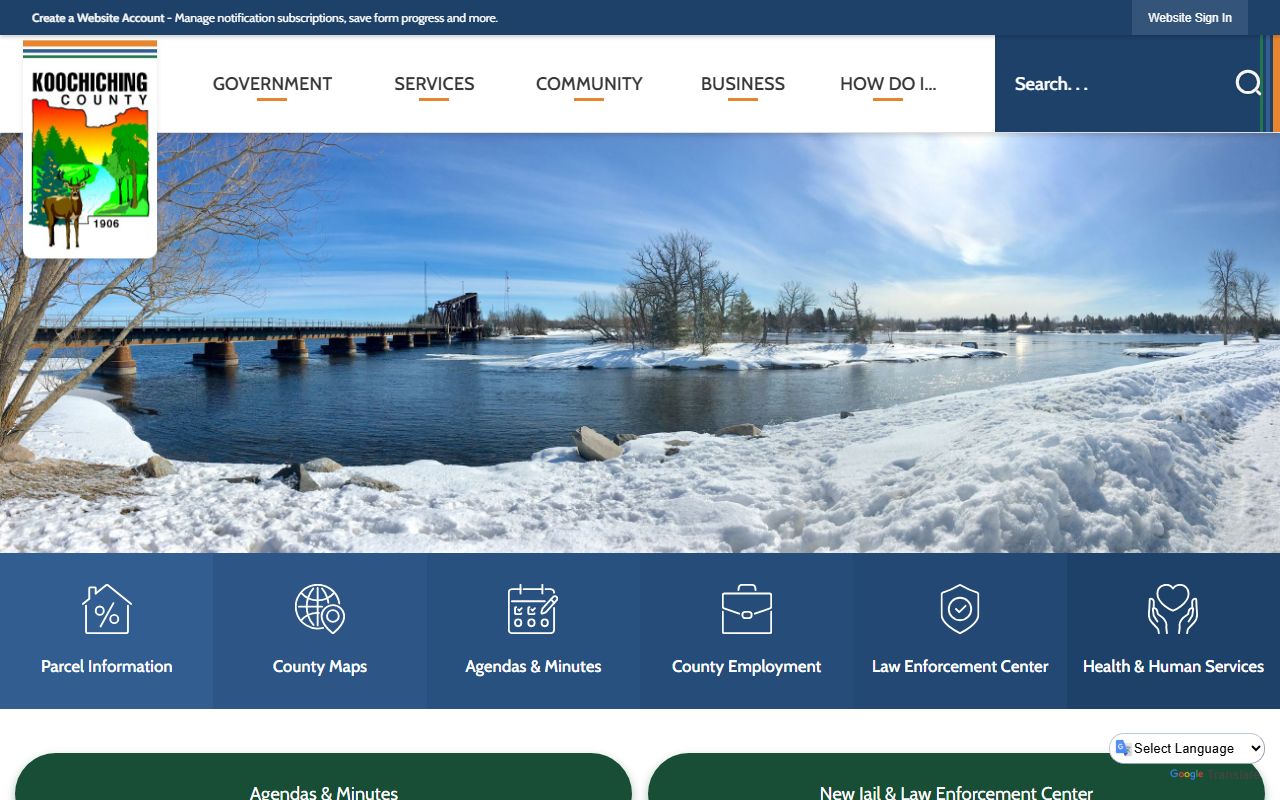
Start at the county site to find the current phone number and confirm whether online deed search is available at the time of your visit.
How to Find Deed Records in Koochiching County
Deed records in Koochiching County can be searched at the Recorder's office in International Falls. In-person searches give you direct access to the index and staff who can help locate documents tied to a specific parcel. Bringing a parcel identification number, legal description, or the names of past or current owners will make the search faster and more focused.
Online access to Koochiching County property records may be available through the county website. The county covers a large geographic area with significant forest and recreational land, so the volume of property transactions is lower than in more densely populated counties. Online systems for smaller counties sometimes have limited document coverage compared to their urban counterparts. Check the county site for the current state of online access.
Mail requests are a good option if you are not near International Falls. Write to the Koochiching County Recorder at 715 4th St, International Falls, MN. Describe the property clearly, identify the documents you need, and include a check for the applicable fees and a self-addressed return envelope. The office will process your request and send back what it finds.
Statewide tools also cover Koochiching County property data. The Minnesota Geospatial Information Office land ownership database at mngeo.state.mn.us provides parcel boundary maps and owner information for all Minnesota counties. This is a free resource that requires no county-specific account.
Recording Requirements and Fees in Koochiching County
The standard recording fee for a deed in Koochiching County is $46. Documents with extra pages may cost more. Confirm the exact fee when you contact the Recorder's office, as the schedule can be updated.
Minnesota deed tax must be paid when recording most property transfers. The rate is 0.33% of the purchase price under Minn. Stat. 287.21. The tax is due at the time of recording. Transfers that qualify for an exemption, such as transfers to a trust or certain family transfers, require a completed exemption form to avoid the tax.
Before a deed can be recorded, the County Auditor must certify that property taxes on the parcel are current. This is required by Minn. Stat. 272.12. If you are handling a closing on your own rather than through a title company, get the tax certificate from the Auditor's office first. The Recorder will not accept a deed without it.
Document formatting must comply with Minn. Stat. 507.093. This statute specifies the required top margin on the first page, minimum font size, and paper standards. Non-compliant documents will be returned. Most deed forms prepared by attorneys or title companies already meet these requirements. Homemade deed forms are the ones most likely to have problems.
When a homestead property is being transferred, both spouses may need to sign. Minn. Stat. 507.02 requires the spouse of a property owner to sign any deed that conveys or encumbers a homestead. Failing to obtain a required spousal signature can invalidate the transfer. This rule applies throughout Minnesota, including Koochiching County.
Deed Types in Koochiching County Records
Warranty deeds are the most common deed type in Koochiching County's recorded documents. A warranty deed transfers ownership with full guarantees from the seller that the title is clear and that the seller will defend the buyer against any claims arising from the seller's period of ownership. Minn. Stat. 507.07 defines what language is needed for a valid warranty deed in Minnesota.
Quitclaim deeds transfer ownership without any guarantee. These show up often in estate work, family property transfers, and situations where a party wants to release a potential claim without representing the quality of the title. The buyer takes whatever the seller has, nothing more. For rural forest parcels in Koochiching County that have been in one family for decades, quitclaims are a common way to pass property down.
Transfer on Death Deeds provide a way to pass real property at death without probate. Minn. Stat. 507.071 governs Minnesota TODDs. The owner names a beneficiary and records the deed while alive. The beneficiary has no rights until the owner dies. The owner can change the beneficiary or revoke the deed entirely by recording a new document. This flexibility makes TODDs popular for estate planning in rural counties like Koochiching.
Contracts for deed appear in Koochiching County records for both land and cabin properties. Under Minn. Stat. 507.235, a contract for deed must be recorded within four months of signing. Recording protects the buyer's interest against any later claims. An unrecorded contract leaves the buyer exposed.
Protecting Your Property in Koochiching County
Deed fraud can happen anywhere, including in rural northern Minnesota. Property owners should check their Koochiching County deed records at least once a year to make sure no unauthorized documents have been filed. Search by your name and parcel number through the county's online system or at the Recorder's office in person.
If you find a suspicious document, contact the Koochiching County Recorder right away. The Minnesota Attorney General at ag.state.mn.us also has fraud resources and can help you understand what steps to take. Acting quickly after discovering a fraudulent deed is critical.
Under Minn. Stat. 507.34, an unrecorded deed is void against a later purchaser who pays value without notice. This rule reinforces why recording promptly after any transaction is important. If you recently received a deed and have not yet recorded it, get it to the Recorder's office as soon as possible.
Historical Deed Records in Koochiching County
Koochiching County was formed in 1907, and deed records from that year onward are held at the Recorder's office in International Falls. The county's land history reflects the logging and paper industry roots of the area, with large timber tracts and government lands making up much of the early deed activity. Today, many properties in the county include significant forest acreage with histories that run back to early logging-era transfers.
For title work on older properties, the Recorder's office has the original recorded documents in various formats. Some early records are in bound ledger books. The staff can help you locate what you need once you provide basic parcel information. Genealogy researchers also use these records to trace family land ownership in Koochiching County's more remote townships.
The Minnesota Courts website at mncourts.gov can also be useful for researching Torrens properties, since Torrens registration involves a court proceeding. If a parcel in Koochiching County went through Torrens registration, the court file provides additional historical ownership information beyond what the Recorder alone holds.
Cities in Koochiching County
International Falls is the county seat and the largest city in Koochiching County. No cities in Koochiching County currently meet the population threshold for a dedicated city page on this site.
Nearby Counties
Koochiching County borders several Minnesota counties and shares the Canadian border to the north.