
Cook County Deed Records
Cook County deed records document every property transfer along Minnesota's North Shore, from Grand Marais to the Canadian border. The Cook County Recorder maintains these documents at the courthouse in Grand Marais. Deed records here cover everything from lakeside cabins to remote forest parcels. You can search current records through the county's Beacon System, which handles property information and tax data for the county. Whether you need a recent transfer or an older land record, the Recorder's office is your starting point.
Cook County Deed Records Overview
Cook County Recorder Office
The Cook County Recorder operates out of the courthouse at 411 W 2nd St in Grand Marais. The phone number is (218) 387-3000. Office hours run Monday through Friday, 8:00 a.m. to 4:30 p.m. Staff can help you search for deed records, pull copies of documents, and answer questions about the recording process. The county website at co.cook.mn.us has current contact information and links to online property tools.
Cook County accepts deed recordings in person, by mail, and through eRecording. The eRecording option lets title companies, lenders, and other authorized filers submit documents electronically. This speeds up the process and avoids delays from mailing. All documents must meet the format standards set out in Minn. Stat. 507.093, which calls for 8.5 by 14 inch paper, black ink, at least 8-point type, white paper, and a 3-inch blank space at the top of the first page. Documents that don't meet these standards may be rejected or returned for correction.
The county uses the Beacon System for property information and tax payments. This platform lets you look up parcel data, ownership history, and tax records tied to specific properties. It ties into the deed records system so you can cross-reference what's recorded with current assessment data.
Recording Deed Records in Cook County
When a property changes hands in Cook County, the deed must be recorded with the Recorder's office. Recording gives public notice of the transfer. Under Minn. Stat. 507.34, an unrecorded deed is void against a later buyer or lender who records first and pays value without notice of the earlier transfer. This makes recording both a legal protection and a practical necessity.
Before any deed can be recorded in Cook County, the county auditor must certify that all property taxes have been paid. This requirement comes from Minn. Stat. 272.12. No deed goes on the public record until the auditor's stamp is on the document. This step protects the county's ability to collect taxes that are due on the land being transferred.
Cook County also collects deed tax at the time of recording. Under Minn. Stat. 287.21, the rate is 0.33% of the purchase price above $3,000. For sales under $3,000, the flat tax is $1.65. The deed tax must be paid before the document is accepted for recording. Most title companies handle this as part of the closing process, but if you're recording on your own, you'll pay it at the Recorder's counter.
Both spouses must sign a deed when the property being transferred is a homestead. Minn. Stat. 507.02 sets this rule. If only one spouse signs and the home is the family homestead, the deed may not be valid. This rule protects both spouses from losing their home without consent.
Types of Deed Records in Cook County
Cook County deed records include several types of documents. Warranty deeds and quitclaim deeds are the most common. Under Minn. Stat. 507.07, a warranty deed guarantees that the grantor holds clear title and will defend the buyer against any future claims. A quitclaim deed transfers only whatever interest the grantor actually has, with no guarantees. Quitclaims are often used between family members or to clear up title issues.
Transfer on death deeds are another option for Cook County property owners. Under Minn. Stat. 507.071, a property owner can record a deed that names a beneficiary to receive the property at death without going through probate. The deed must be recorded before the owner dies to be valid. It stays revocable during the owner's lifetime, meaning you can change or cancel it at any time by recording a new document. This is a popular estate planning tool for North Shore cabins and vacation properties that families want to keep in the family.
Contracts for deed also get recorded in Cook County. These are seller-financing arrangements where the buyer makes payments over time and gets the deed only after paying off the balance. Under Minn. Stat. 507.235, a contract for deed must be recorded within four months of signing. Failure to record on time can create legal problems for both parties.
Abstract and Torrens Property in Cook County
Cook County uses both the abstract system and the Torrens system. Most rural parcels in the county are abstract property, meaning title is established by a chain of recorded documents going back to the original patent. Abstract property owners often work with a title company or abstracting service to maintain an up-to-date abstract showing the full ownership history.
Some parcels in the county are registered under the Torrens system, which is governed by Minn. Stat. Chapter 508. Torrens property has a certificate of title issued by the court. The certificate is the definitive proof of ownership. When a Torrens property changes hands, the old certificate is canceled and a new one is issued in the buyer's name. Torrens documents follow different recording procedures than abstract deeds and must be handled through the court system as well as the Recorder's office.
If you're not sure whether a property is abstract or Torrens, the Recorder's office can tell you. The Beacon System may also show this information when you look up a parcel. It matters for title searches and for understanding what records you need to review before a purchase.
Searching Cook County Deed Records Online
The Cook County Beacon System is the main online tool for property research in the county. It gives you access to parcel data, ownership information, and tax records. The system is tied to the recorded documents at the Recorder's office, so you can use it to get basic ownership information before requesting copies of specific deeds.
The Minnesota Geospatial Information Office maintains statewide land ownership data. Their Land Ownership dataset at mngeo.state.mn.us includes Cook County and can be useful for broad searches. The screenshot below shows the MnGeo land ownership portal, which compiles parcel data from counties across the state.
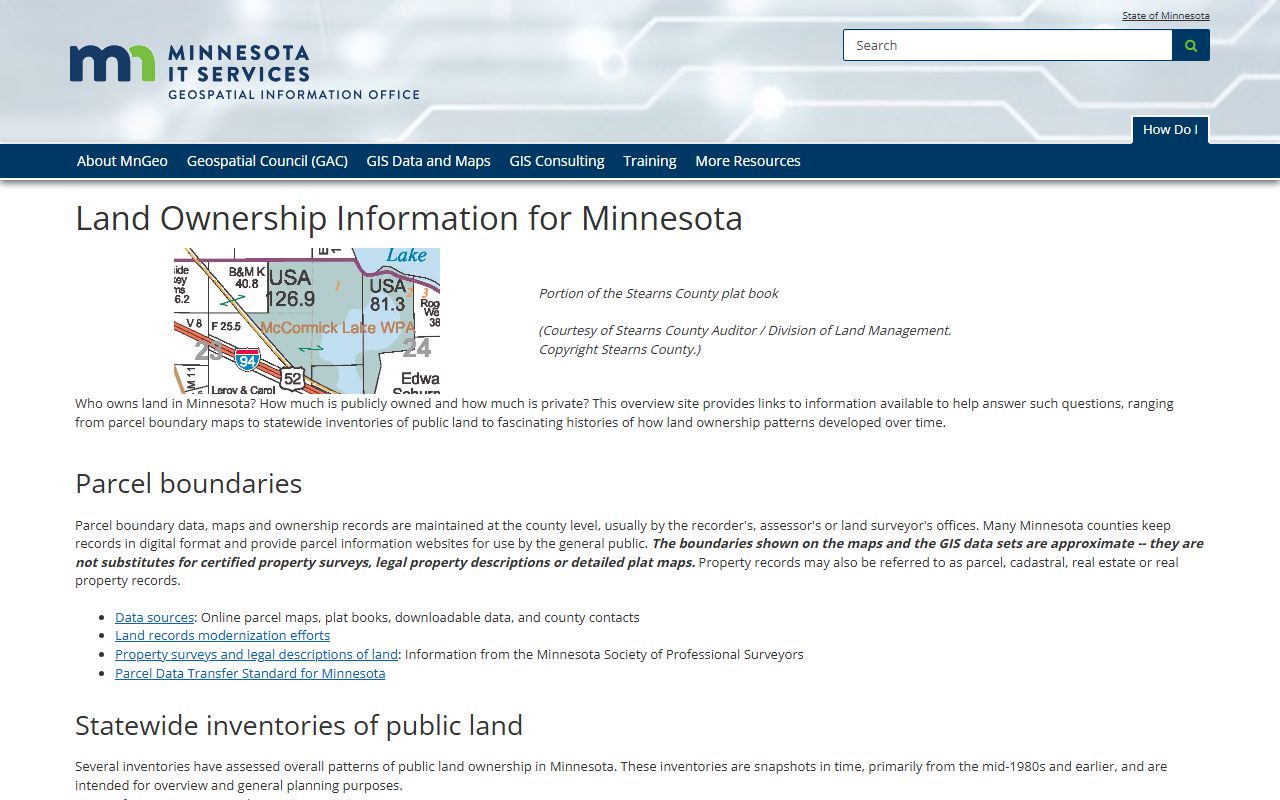
The MnGeo portal is a good starting point when you need to check land ownership in multiple counties at once, including Cook and neighboring Lake County.
For the full text of Minnesota statutes that apply to Cook County deed records, the Minnesota Revisor of Statutes website at revisor.mn.gov has everything you need. The screenshot below shows the Revisor's statutes portal, which is the official source for all recording laws that apply to Cook County.
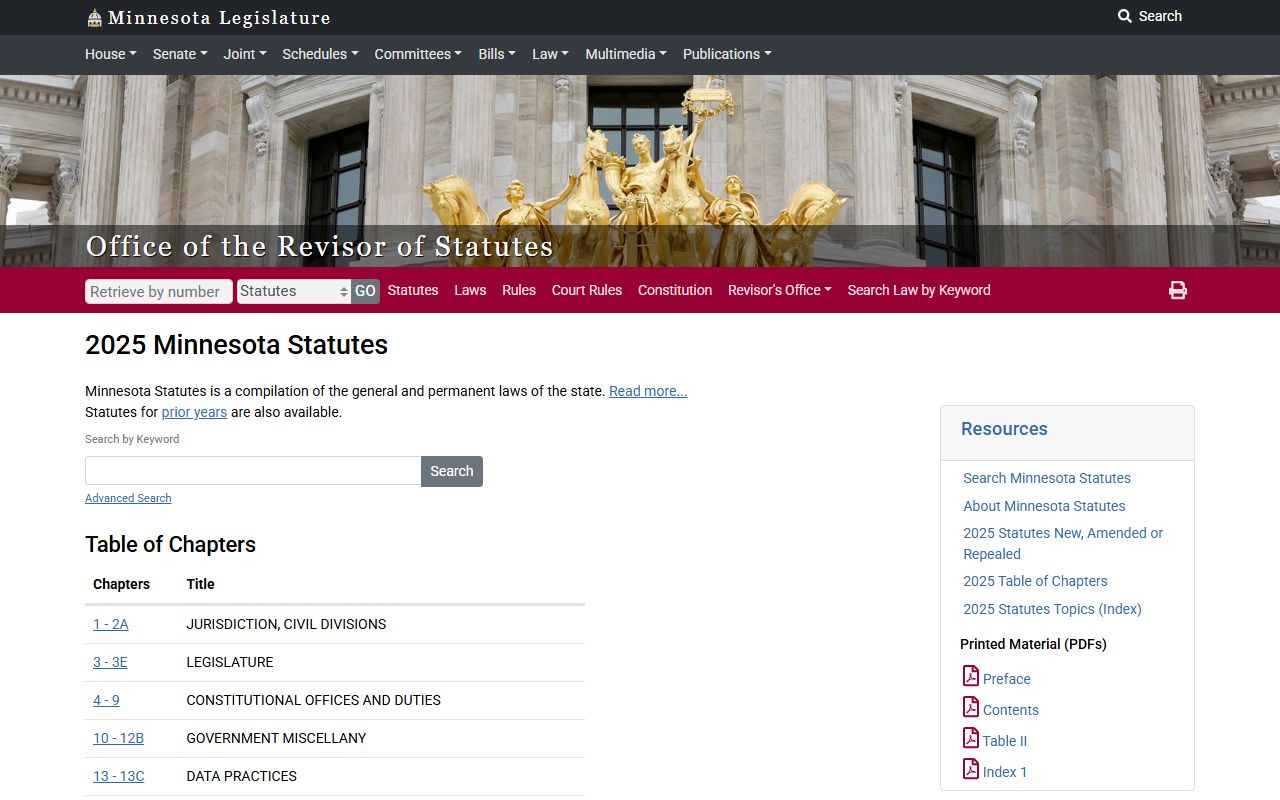
Using the Revisor's site, you can read the full text of statutes 507.34, 507.093, 507.07, and the other laws that govern deed recording in Cook County.
For in-person searches, go to the Recorder's office at 411 W 2nd St in Grand Marais. Staff can pull documents by grantor or grantee name, parcel number, or document number. Bring as much information as you have about the property to speed up the search.
Cook County Deed Recording Costs
The standard recording fee in Cook County is $46 for most deeds and real estate documents. This covers the Recorder's work of reviewing, filing, and indexing the document. Additional pages may add to the cost. The deed tax is separate from the recording fee and is calculated based on the sale price under Minn. Stat. 287.21.
Copy fees apply when you need printed copies of recorded documents. Non-certified copies cost less than certified copies. Certified copies carry the official seal of the Recorder and are accepted as legal proof of what is on file. You may need a certified copy when updating ownership records at a lender, proving title for insurance purposes, or handling an estate.
The county website at co.cook.mn.us has current fee information. Fees can change from year to year, so check before you record or request copies. Payments are accepted at the Recorder's counter in Grand Marais.
Cook County Recorder Online Portal
The Cook County website at co.cook.mn.us is where you'll find the Recorder's office contact page, links to the Beacon System, and general information about county services. The screenshot below shows the Cook County homepage, which provides access to property records and recorder tools.
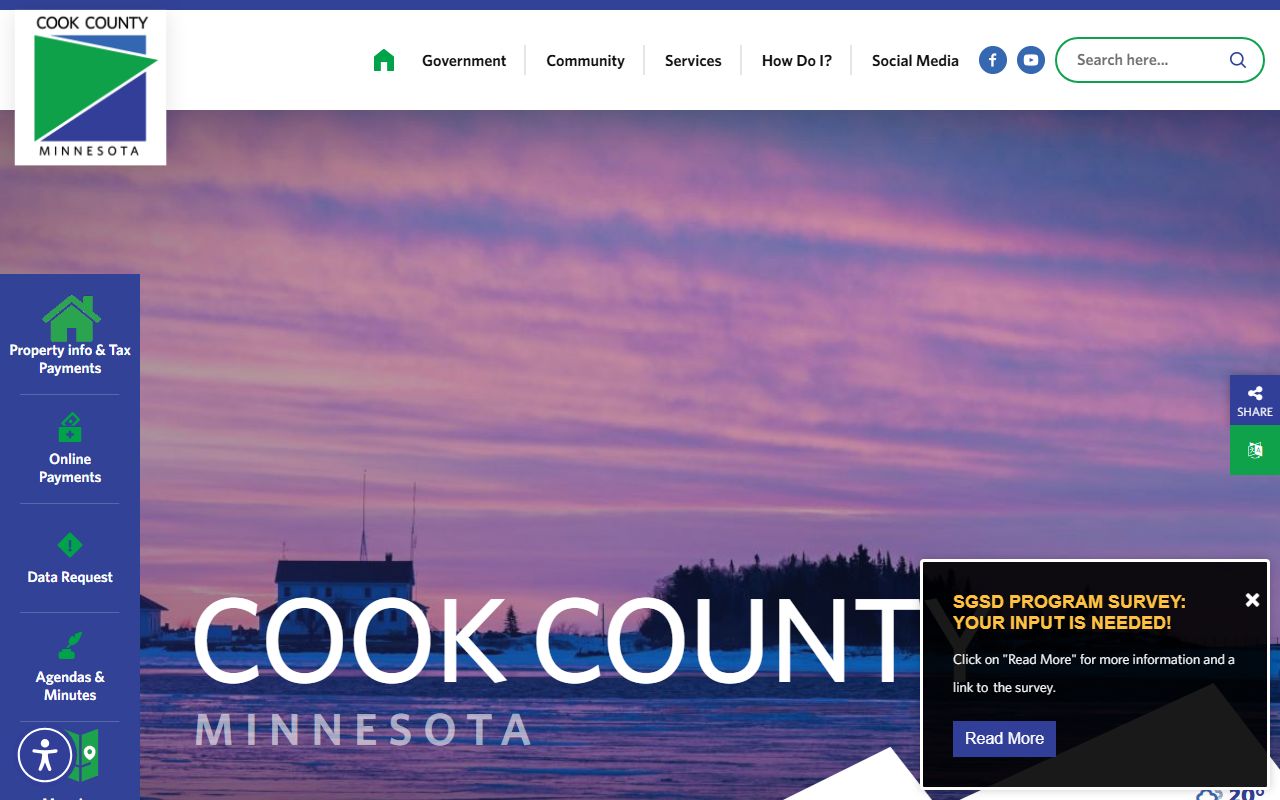
From the county site, you can navigate to the Beacon System to look up parcel data and ownership records for Cook County properties.
Cities in Cook County
Cook County is largely rural. Grand Marais is the county seat and largest community. No cities in Cook County meet the population threshold for a dedicated page on this site. Communities like Grand Marais, Lutsen, and Tofte are served by the Cook County Recorder in Grand Marais.
Nearby Counties
Cook County sits at the northeast tip of Minnesota, bordered by Lake County to the west and the Canadian border to the north and east.