
Find Deed Records in St. Paul
St. Paul deed records are held by the Ramsey County Recorder, which processes and stores all property transfers, mortgage documents, and title instruments for parcels within Saint Paul and the rest of Ramsey County. This page covers where to search those records, how online tools work, and what city and county resources support deed research in the capital city.
St. Paul Deed Records Overview
Ramsey County Recorder - St. Paul Deeds
The Ramsey County Recorder's Office is located at Saint Paul City Hall, 15 W. Kellogg Blvd., Room 72, St. Paul, MN 55102. The office can be reached by phone at 651-266-2050 or by email at RecordingAcctSupport@ramseycounty.us. The Property Resource Center is located at the Plato Building and is open Monday through Friday from 8:00 AM to 4:15 PM.
The recorder processes warranty deeds, quitclaim deeds, mortgages, satisfactions, TODDs, and other instruments that affect title to real property in Ramsey County. Under Minnesota Statute 507.34, a deed that is not recorded is void against a later buyer who records without notice. That rule applies to every St. Paul property transfer. You can find more information on the Ramsey County Recorder website.
The base recording fee is $46 per document. Deed tax applies at 0.34% of the net purchase price under Minn. Stat. 287.21. Before any deed can be recorded, tax certification must be obtained under Minn. Stat. 272.12, confirming all property taxes are current. Document formatting must comply with Minn. Stat. 507.093 or the recorder will reject the filing.
Ramsey County handles Torrens title matters through the Examiner of Titles. Torrens parcels require a different processing path under Minn. Stat. ch. 508. If you are unsure whether a St. Paul property is Abstract or Torrens, the county recorder's office can tell you.
Note: You can also contact the recorder at AskCountyRecorder@co.ramsey.mn.us for general questions about document submissions and search procedures.
Online Property Search - Ramsey County
The Ramsey County Property Tax and Value Lookup tool lets you search by address, parcel ID, or owner name. It is free to use and provides current ownership, assessed value, tax status, and links to recorded documents in many cases. This is the fastest way to start a deed search for St. Paul property.
The Ramsey County Assessor is located at 90 Plato Blvd. West, Saint Paul, MN 55107, and can be reached at 651-266-2131. The assessor's records show ownership, property classification, and assessed values, all of which tie into deed research and deed tax calculations.
For deeper document searches, Ramsey County provides online access through the recorder's office. You can search by grantor, grantee, document type, or date range. This is useful when you need a full chain of title going back multiple transactions or need to find a specific recorded instrument by document number.
Note: St. Paul Planning and Zoning can be reached at 651-266-9000 for questions about zoning classifications, variances, or land use applications that may affect a property you are researching.
Deed Types Filed in St. Paul
Warranty deeds and quitclaim deeds are the most common deed types in St. Paul. Both are defined under Minn. Stat. 507.07. A warranty deed gives the buyer covenants of title - the seller promises the title is good and will defend it. A quitclaim deed passes only whatever interest the grantor holds, with no promises. Both require notarization before recording.
When a St. Paul property is homestead and the owner is married, Minn. Stat. 507.02 requires both spouses to sign the deed. This rule is strictly enforced. A deed that lacks a required spousal signature on homestead property is defective and can cloud the title.
Transfer-on-death deeds are available under Minn. Stat. 507.071. A TODD allows a property owner to name a beneficiary who will receive title at death without going through probate. The TODD must be recorded during the owner's lifetime. It can be revoked or changed any time before death. TODDs are popular in St. Paul for estate planning because they avoid the cost and delay of probate.
City Property Resources
The image below shows the Ramsey County Assessor's interface, which is one of the most useful starting points for deed research on St. Paul property.
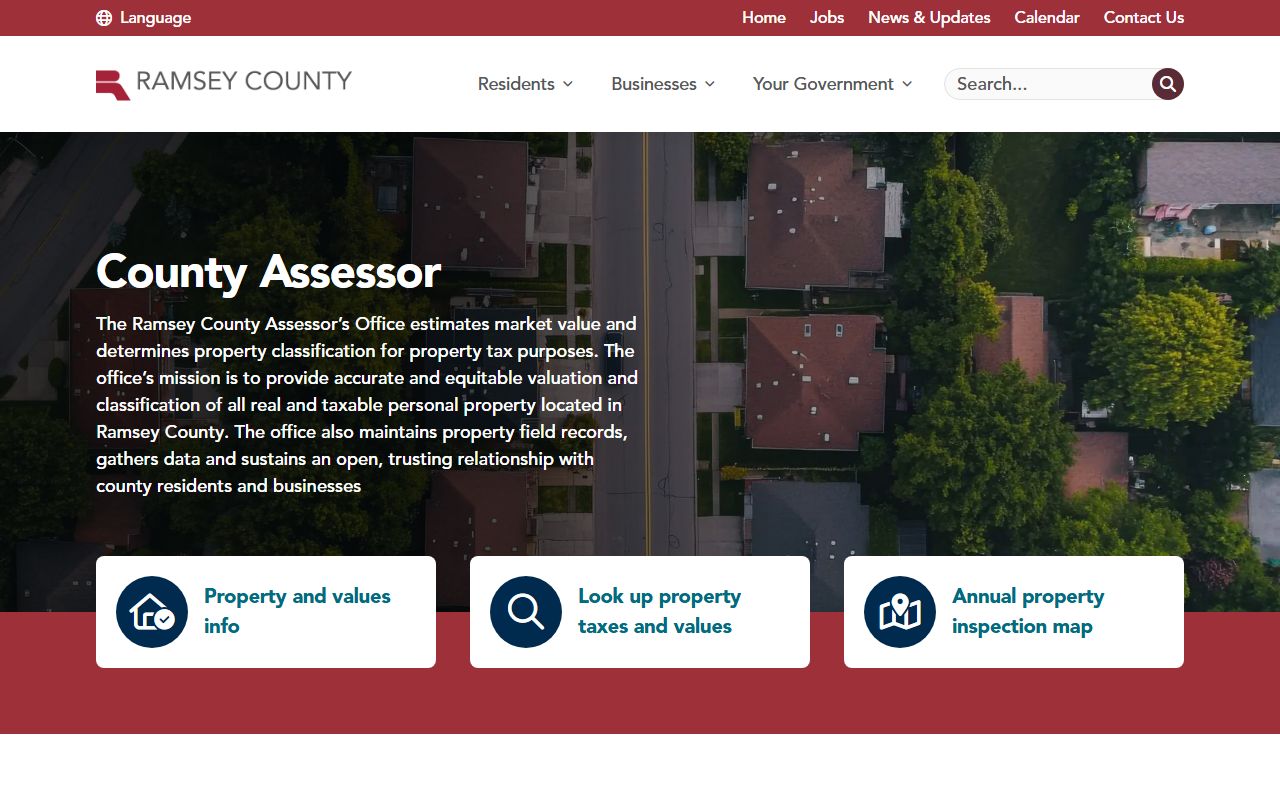
From the assessor portal you can pull current ownership details, which is often the first step before requesting full recorded documents from the county recorder.
The St. Paul Planning and Zoning office handles approvals, plats, and land use matters that sometimes affect how a property can be transferred or developed. Before recording a deed that includes a subdivision or lot split, check with the planning office to confirm no approval is needed. Open variances or conditional use permits may also attach to a property and are worth reviewing during title research.
Why Recording Protects St. Paul Buyers
Recording a deed is the legal act that puts the public on notice of a transfer. Under Minn. Stat. 507.34, a buyer who does not record loses to a later buyer who records first without notice. This is called the race-notice rule. It means that even a valid, signed deed provides no protection until it appears in the Ramsey County recorder's files.
For St. Paul buyers, the lesson is simple. Record your deed immediately after closing. Do not wait. Most professional closings handle recording the same day or within a day or two. In private transfers, recording sometimes gets delayed. That gap is a real risk. Anyone who searches the record and finds no deed can claim they had no notice of your purchase.
Recording also protects against fraud. Once a deed is on record, it is much harder for someone to forge or back-date a competing claim. The public record at the Ramsey County Recorder is the authoritative source of title for every parcel in St. Paul.
Nearby Cities
Deed records for these nearby communities are also filed with their respective county recorders.